To provide contemporary American students--whose lives are lived largely after or without tradition--a vivid experience of tradition in the arts, spirituality and worship, and civic life.
To inspire young people of faith to re-connect with the artistic traditions of the past, neither in a mood of nostalgia nor in a mode of academic dispassion, but to foster a creative response to the past in order to shape a humane future in the arts.
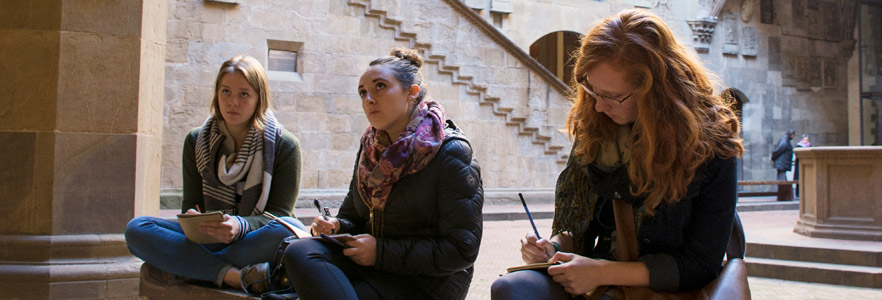
To establish a workshop environment that invites collaboration between teacher and student, integrating listening and writing with seeing and doing, and emphasizing an interdisciplinary approach to the study of art, history and theology.
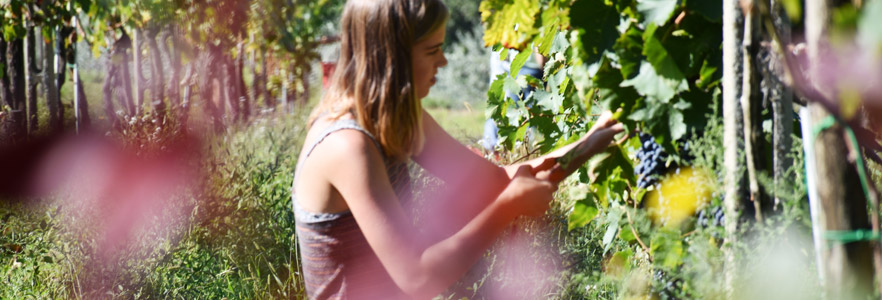
To give students an experience of rhythms of life slower and simpler than the forms of contemporary American life (with its speed and size, its barrage of visual images, and its pervading sense of impermanence) by dining together, encouraging sustained conversation, experiencing the traditional liturgies of religious life and civic celebrations, living more closely to the earth in the midst of vineyards and olive groves, and by trading the automobile for the foot.
PURPOSE
To provide contemporary American students--whose lives are lived largely after or without tradition--a vivid experience of tradition in the arts, spirituality and worship, and civic life.
To inspire young people of faith to re-connect with the artistic traditions of the past, neither in a mood of nostalgia nor in a mode of academic dispassion, but to foster a creative response to the past in order to shape a humane future in the arts.
To establish a workshop environment that invites collaboration between teacher and student, integrating listening and writing with seeing and doing, and emphasizing an interdisciplinary approach to the study of art, history and theology.
To give students an experience of rhythms of life slower and simpler than the forms of contemporary American life (with its speed and size, its barrage of visual images, and its pervading sense of impermanence) by dining together, encouraging sustained conversation, experiencing the traditional liturgies of religious life and civic celebrations, living more closely to the earth in the midst of vineyards and olive groves, and by trading the automobile for the foot.
PURPOSE
To provide contemporary American students--whose lives are lived largely after or without tradition--a vivid experience of tradition in the arts, spirituality and worship, and civic life.
To inspire young people of faith to re-connect with the artistic traditions of the past, neither in a mood of nostalgia nor in a mode of academic dispassion, but to foster a creative response to the past in order to shape a humane future in the arts.
To establish a workshop environment that invites collaboration between teacher and student, integrating listening and writing with seeing and doing, and emphasizing an interdisciplinary approach to the study of art, history and theology.
To give students an experience of rhythms of life slower and simpler than the forms of contemporary American life (with its speed and size, its barrage of visual images, and its pervading sense of impermanence) by dining together, encouraging sustained conversation, experiencing the traditional liturgies of religious life and civic celebrations, living more closely to the earth in the midst of vineyards and olive groves, and by trading the automobile for the foot.
PURPOSE
To provide contemporary American students--whose lives are lived largely after or without tradition--a vivid experience of tradition in the arts, spirituality and worship, and civic life.
To inspire young people of faith to re-connect with the artistic traditions of the past, neither in a mood of nostalgia nor in a mode of academic dispassion, but to foster a creative response to the past in order to shape a humane future in the arts.
To establish a workshop environment that invites collaboration between teacher and student, integrating listening and writing with seeing and doing, and emphasizing an interdisciplinary approach to the study of art, history and theology.
To give students an experience of rhythms of life slower and simpler than the forms of contemporary American life (with its speed and size, its barrage of visual images, and its pervading sense of impermanence) by dining together, encouraging sustained conversation, experiencing the traditional liturgies of religious life and civic celebrations, living more closely to the earth in the midst of vineyards and olive groves, and by trading the automobile for the foot.
PURPOSE
To provide contemporary American students--whose lives are lived largely after or without tradition--a vivid experience of tradition in the arts, spirituality and worship, and civic life.
To inspire young people of faith to re-connect with the artistic traditions of the past, neither in a mood of nostalgia nor in a mode of academic dispassion, but to foster a creative response to the past in order to shape a humane future in the arts.
To establish a workshop environment that invites collaboration between teacher and student, integrating listening and writing with seeing and doing, and emphasizing an interdisciplinary approach to the study of art, history and theology.
To give students an experience of rhythms of life slower and simpler than the forms of contemporary American life (with its speed and size, its barrage of visual images, and its pervading sense of impermanence) by dining together, encouraging sustained conversation, experiencing the traditional liturgies of religious life and civic celebrations, living more closely to the earth in the midst of vineyards and olive groves, and by trading the automobile for the foot.
PURPOSE
To provide contemporary American students--whose lives are lived largely after or without tradition--a vivid experience of tradition in the arts, spirituality and worship, and civic life.
To inspire young people of faith to re-connect with the artistic traditions of the past, neither in a mood of nostalgia nor in a mode of academic dispassion, but to foster a creative response to the past in order to shape a humane future in the arts.
To establish a workshop environment that invites collaboration between teacher and student, integrating listening and writing with seeing and doing, and emphasizing an interdisciplinary approach to the study of art, history and theology.
To give students an experience of rhythms of life slower and simpler than the forms of contemporary American life (with its speed and size, its barrage of visual images, and its pervading sense of impermanence) by dining together, encouraging sustained conversation, experiencing the traditional liturgies of religious life and civic celebrations, living more closely to the earth in the midst of vineyards and olive groves, and by trading the automobile for the foot.
PURPOSE
To provide contemporary American students--whose lives are lived largely after or without tradition--a vivid experience of tradition in the arts, spirituality and worship, and civic life.
To inspire young people of faith to re-connect with the artistic traditions of the past, neither in a mood of nostalgia nor in a mode of academic dispassion, but to foster a creative response to the past in order to shape a humane future in the arts.
To establish a workshop environment that invites collaboration between teacher and student, integrating listening and writing with seeing and doing, and emphasizing an interdisciplinary approach to the study of art, history and theology.
To give students an experience of rhythms of life slower and simpler than the forms of contemporary American life (with its speed and size, its barrage of visual images, and its pervading sense of impermanence) by dining together, encouraging sustained conversation, experiencing the traditional liturgies of religious life and civic celebrations, living more closely to the earth in the midst of vineyards and olive groves, and by trading the automobile for the foot.
PURPOSE
To provide contemporary American students--whose lives are lived largely after or without tradition--a vivid experience of tradition in the arts, spirituality and worship, and civic life.
To inspire young people of faith to re-connect with the artistic traditions of the past, neither in a mood of nostalgia nor in a mode of academic dispassion, but to foster a creative response to the past in order to shape a humane future in the arts.
To establish a workshop environment that invites collaboration between teacher and student, integrating listening and writing with seeing and doing, and emphasizing an interdisciplinary approach to the study of art, history and theology.
To give students an experience of rhythms of life slower and simpler than the forms of contemporary American life (with its speed and size, its barrage of visual images, and its pervading sense of impermanence) by dining together, encouraging sustained conversation, experiencing the traditional liturgies of religious life and civic celebrations, living more closely to the earth in the midst of vineyards and olive groves, and by trading the automobile for the foot.
PURPOSE
To provide contemporary American students--whose lives are lived largely after or without tradition--a vivid experience of tradition in the arts, spirituality and worship, and civic life.
To inspire young people of faith to re-connect with the artistic traditions of the past, neither in a mood of nostalgia nor in a mode of academic dispassion, but to foster a creative response to the past in order to shape a humane future in the arts.
To establish a workshop environment that invites collaboration between teacher and student, integrating listening and writing with seeing and doing, and emphasizing an interdisciplinary approach to the study of art, history and theology.
To give students an experience of rhythms of life slower and simpler than the forms of contemporary American life (with its speed and size, its barrage of visual images, and its pervading sense of impermanence) by dining together, encouraging sustained conversation, experiencing the traditional liturgies of religious life and civic celebrations, living more closely to the earth in the midst of vineyards and olive groves, and by trading the automobile for the foot.
Gordon College in Wenham, Massachusetts, is among the top Christian colleges in the nation and the only nondenominational Christian college in New England. Gordon is committed to excellence in liberal arts education, spiritual development and academic freedom informed by a framework of faith.