
Neuroscience Minor
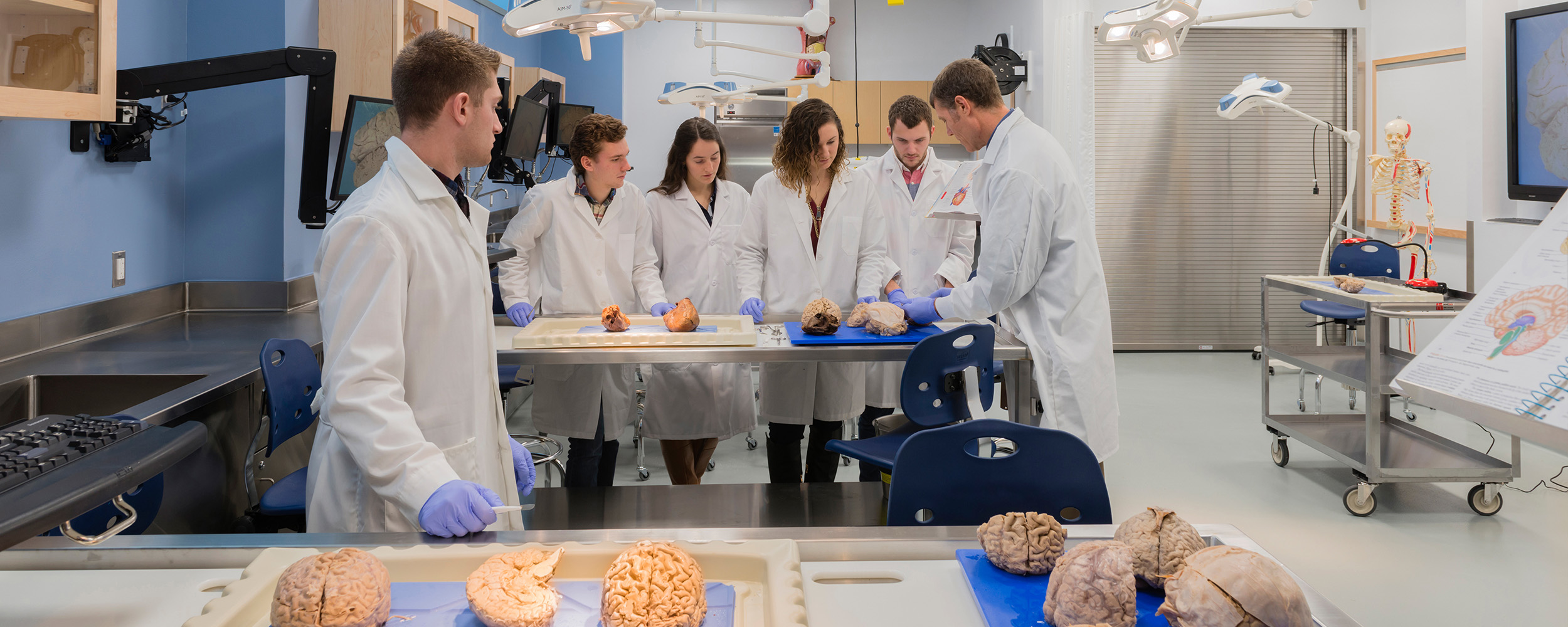
As you read these words, 100 billion neurons in your brain have already fired approximately 600 times each. This is a remarkable amount of activity—and it’s only scratching the surface of the immensely complex mystery of the human brain. In the neuroscience minor, you’ll explore how the brain impacts thoughts, emotions, learning and behavior—and how it changes with factors like injuries, disorders and prescription drugs.
Why study neuroscience at Gordon?
As a neuroscience student, you will study under invested faculty who are faithful mentors, gifted teachers and active researchers. Gordon’s intensely hands-on approach affords you opportunities to complete internships in your area of interest, do lab work with our 40-channel EEG brain imaging machine, and engage in publishable research (with a faculty member or on your own) on the neurophysiological aspects of language, memory, anxiety, moral decision making and more.
What careers can I pursue with a neuroscience minor?
You will be prepared to pursue top-notch graduate programs in neuroscience, and to make significant contributions in a variety of careers, including:
- Neuroscience, neuropsychology and neurology
- Cognitive rehabilitation
- Biotechnology, biopsychology or biomedicine
- Psychiatric healthcare
- Pharmaceuticals
- Medicine and nursing
- Health psychology and public health
- Veterinary medicine
Learn more about jobs and internships ➔
Go the Extra mile!
Extend your learning beyond the classroom through an off-campus internship, or take advantage of multiple opportunities to present and publish research as an undergraduate student—either by joining active faculty projects or carrying out your own.
Global Opportunities
Pack your bags and broaden your horizons through a Global Education program.
Interested?
For more information, contact:
Gregory S. Keller
Professor of Conservation Biology
Chair of the Life, Health, and Physical Sciences
E [email protected]
P 978 867 4852
 Kinesiology
 Neuroscience Minor
 Home
Home


Gordon College, 255 Grapevine Road, Wenham, MA 01984
978 867 4000 | [email protected] | [email protected]





- Apply Today
- Visit Campus
- Request Information
- Contact
- Directions/Map
- The Bell: News & Stories
- Jobs
- About
- Admissions & Aid
- Academics
- Student Life
- Faith
- Athletics
- Graduate Programs
- Giving
- Alumni
- Parents
- Student Links
- Human Resources
- Bennett Center
- La Vida
- Website Privacy
- Title IX
Gordon College is New England’s top Christian college, located on the North Shore of Boston in Wenham, MA.
© Copyright 2024. All rights reserved.
866-665-1780