
Annual Green Chemistry Lectures
Each year the chemistry department invites an expert to Gordon to speak about Green Chemistry. Come back to see who the next one will be.
For more info on our Green Chemistry Series, email: [email protected]

2018–19 Green Chemistry Lecture, September 24, 2018
John C. Warner, Ph.D.
President and Chief Technology Officer, Warner Babcock Institute for Green Chemistry LLC; President, Beyond Benign
"Green chemistry: Inventing a Sustainable Future"
We increasingly hear about hazardous chemicals in our products. The oceans are filled with plastics. The Earth's climate is becoming more chaotic. Loud and clear we recognize the desperate need to put society on a sustainable pathway. At the same time, scientists worry about the general public's lack of appreciation or ability to understand basic science. It is an inescapable reality that the next generation of students in chemistry will be living and working in a very different world than the previous generation. Despair is not an option. The future can be brighter than ever. We need to attract and train the next generation of students to be part of the optimistic promise of green chemistry. The evolution of Green Chemistry is happening. Industrial labs are embracing the principles and academic departments across the country are reorienting their curriculum. But there is still so much to do. This discussion will explain why students (and their instructors) need to know that they are essential to achieving a sustainable future. Albert Einstein once said that "No problem can be solved at the same level of awareness that created it". We need a diversity of students that have new perspectives and new ideas, to help us chart our path forward.
John received his BS in Chemistry from UMASS Boston, and his Ph.D. in Chemistry from Princeton University. After working at the Polaroid Corporation for nearly a decade, he then served as tenured full professor at UMASS Boston and Lowell (Chemistry and Plastics Engineering). In 2007 he founded the Warner Babcock Institute for Green Chemistry, with Jim Babcock (a research organization developing green chemistry technologies), and Beyond Benign with Amy Cannon (a non-profit dedicated to sustainability and green chemistry education).
His research and publications in synthetic organic chemistry, noncovalent derivatization, polymer photochemistry and low temperature metal oxide semiconductors has provided the foundation for his theories of what he calls “entropic control in materials design”. His inventions and patents in molecular design, pharmaceuticals, cosmetics, adhesives, metals recycling, asphalt pavement and solar energy are the basis for several startup companies and provide the backdrop to his theories on creativity and innovation.
John is one of the founders of the field of Green Chemistry, co-authoring the defining text “Green Chemistry: Theory and Practice” with Paul Anastas. He has published extensively on the application of the 12 principles of green chemistry and the need to incorporate them into product design and the chemistry curriculum. Because of his unique view of the chemical enterprises, formed from over 30 years of experience in industry, academia and entrepreneurship he has been asked to serve on several regional, national and international government initiatives in chemicals policy.
John has received awards as an academic, an industrial chemist, an inventor and a sustainability thought leader. He received the 2004 Presidential Award for Excellence in Science Mentoring (one of the highest awards for US science education), the 2014 Perkin Medal (one of the highest honors in American Industrial Chemistry) and was named a 2016 AAAS-Lemelson Invention Ambassador. He received the American Institute of Chemistry's Northeast Division's Distinguished Chemist of the Year for 2002 and the Council of Science Society President’s 2008 Leadership award. Warner was named by ICIS as one of the most influential people impacting the global chemical industries. In 2011 he was elected a Fellow of the American Chemical Society and named one of “25 Visionaries Changing the World” by Utne Reader. In 2017 the German Ministry of Economic Affairs and The Technical University of Berlin announced the naming of “The John Warner Center for Green Chemistry Start-Ups” in his honor.
)
2017–18 Green Chemistry Lecture, September 25, 2017
Kenneth Doxsee, Professor of Chemistry and Associate Vice Provost for Academic Affairs, University of Oregon, Eugene, OR
"Decision Making for Sustainability"
Making decisions can be difficult, and the higher the stakes, the more pressure to make the right decision. When our concern is the health and well-being of our planet and its flora and fauna (including us!), the stakes are very high indeed. How do we make decisions regarding such literally life or death issues when we can’t even agree on whether paper shopping bags are preferable to plastic?! Through consideration of a series of “simple” examples of individual and collective choices, we will explore critical factors in environmentally-related decision making. We will then turn to the decisions we make as educators, as students, and as practitioners of chemistry that impact our health and safety. Finally, we will consider ways in which we can bring both the joy of experimental science and the wisdom of environmentally-based decision making to students regardless of where they are located or what resources may be available to them, concluding with an overview of educational opportunities in remote, rural communities in Madagascar.
Professor Kenneth M. Doxsee received his B.S. degree in chemistry from Stanford University in 1978. Carrying out research on the design, synthesis, and analysis of model compounds for the oxygen transport proteins, hemoglobin and myoglobin, he received his M.S. degree from Stanford University in 1979. With the support of a Fannie and John Hertz Foundation graduate fellowship, Doxsee worked at the California Institute of Technology on the development of catalytic methods for the production of fuels from carbon monoxide, receiving his Ph.D. in organic/organometallic chemistry in 1983. Following a two-year postdoctoral appointment with Donald J. Cram at UCLA, during which time he carried out studies in the area of organic synthesis and molecular recognition with the support of an American Cancer Society postdoctoral fellowship, Doxsee moved to the University of Southern California as an assistant professor. He was recruited by the University of Oregon as an associate professor in 1989 and was promoted to full professor at Oregon in 1999. From 1996 through 2007, he also served as a Program Officer and Acting Program Director in the Organic and Macromolecular Chemistry Program at the National Science Foundation. His research focuses on the interface between organic and inorganic chemistry, focusing on the design of selective binding agents for ions and on the application of molecular recognition phenomena in the synthesis and crystallization of organic and inorganic materials under environmentally benign conditions. Since 1997, Doxsee has worked with his colleague, Jim Hutchison, on the development of the Green Chemistry program at the University of Oregon. In 2008, he was named a Williams Fellow at the University of Oregon, one of the University’s highest teaching honors, in recognition of extraordinary commitment to undergraduate education, and he received the American Chemical Society’s award for Outstanding Contributions to the Incorporation of Sustainability into Chemical Education in 2010. He has presented numerous national and international lectures and laboratory workshops on Green Chemistry, including a distance education program for high school teachers in Thailand.
)
2016–17 Green Chemistry Lecture, October 3, 2016
James E. (Jim) Hutchison, Lokey-Harrington Chair in Chemistry, Department of Chemistry and Materials Science Institute, University of Oregon
"Weaving Green Chemistry into Nanotechnology: Molecular-level Product Innovation for Nano-enabled Textiles"
Nanotechnology offers new materials and applications that promise numerous benefits to society and the environment, yet there is concern about the potential health and environmental impacts of production and use of nanoscale products. Because nanotechnology is still in the “discovery” phase, the design and production of materials have yet to be optimized. For example, although hundreds of studies of nanomaterial hazards have been reported, there is no consensus about the impacts of these materials or design rules that guide the future development of the materials. Additionally, the synthetic methods used to produce nanomaterials are often inefficient or require the use of hazardous reactants. To advance beneficial applications of nanomaterials and minimize harm, we need to understand how nanomaterials interact with the environment and the causes of their biological impacts, and we need to develop new methods of production that address the limitations of discovery scale approaches. Green chemistry is an approach to the design of materials, processes and applications that has the potential to reduce hazards at each stage of the life cycle. I will describe how green chemistry can be applied to nanomaterials, nanosynthesis and nano-enabled products, with an emphasis on the design of next generation textiles with environmental benefits derived from nanomaterials.
Dr. Hutchison earned his B.S. in chemistry from the University of Oregon and his Ph.D. in organic chemistry from Stanford University. He conducted postdoctoral research at the University of North Carolina. He joined the faculty at the University of Oregon (UO) in 1994 where he is currently the Lokey-Harrington Chair in Chemistry. His research interests are in green chemistry, materials chemistry and nanoscience. He led the development of the UO's curriculum in green organic chemistry, launched the university’s pioneering efforts in Greener Nanoscience and has been a member of the Governing Board of the ACS Green Chemistry Institute. He was a founding Associate Editor of the journal Environmental Science: Nano and has served on four National Research Council Committees related to green chemistry, nanoscience and sustainability. He has won a number of awards, including the Alfred P. Sloan Research Fellowship and an NSF-CAREER award. He is the author of more than 130 refereed publications and a textbook ("Green Organic Chemistry: Strategies, Tools and Laboratory Experiments").
)
2015–16 Green Chemistry Lecture, September 21, 2015
Richard Engler, Bergeson & Campbell PC, Washington, DC
"Can Green Chemistry Solve the Problem of Marine Debris?"
Green chemistry, the considered design of chemical products and processes, has helped reduce the negative impacts of our modern society. It has improved the material and energy efficiency of chemistry and it has reduced the hazard of what we still use. Marine debris (trash in the oceans) has garnered significant attention in the past 5-10 years with vivid images of ecosystem damage. Can green chemistry be brought to bear to help? After an introduction to green chemistry and marine debris, we will discuss the possibilities and limitations of developing new green chemistry technologies to help.
Rich Engler is a Senior Chemist with Bergeson & Campbell, P.C. (B&C®) and The Acta Group (Acta®). Before joining B&C this year, he worked at U.S. Environmental Protection Agency (EPA) for 17 years, where he was a senior staff chemist in the Office of Pollution Prevention and Toxics. At EPA he reviewed numerous chemicals under the Toxic Substances Control Act (TSCA), led the Green Chemistry Program, including the Presidential Green Chemistry Challenge, and worked on a variety of other projects, including the Risk-Screening Environmental Indicators, Marine Debris and Trash-Free Waters, and cheminformatics. Prior to joining EPA, Rich taught organic chemistry at the University of San Diego. He holds a Ph.D. in physical organic chemistry from UCSD.
)
2014–15 Green Chemistry Lecture, September 29, 2014
Liz Gron, Hendrix College, Conway, AR
"Southern Greens For Healthy Scientists and Citizens"
Green things thrive in the south; this is true of both plants and chemistry. Research has proven green plants are good for our diet and green chemistry is good for our planet. While we all “know” this is on an abstract level, applying green in our daily lives is hard when the ever expedient potato-chip, or chlorinated solvent, beckons.
Although the importance of green chemistry is clear, it has been over 15 years since Anastas and Warner described the obvious benefits of designing around green chemical principles and this philosophy is still not the standard across industrial fields or in academia. A real barrier to adoption is understanding that adding a green design criteria is an initial investment that results in a superior process or product in the future. Sadly, none of us are good with delayed gratification.
This talk will discuss green chemistry from an analytical perspective (the view from the kitchen). While analytical chemists are responsible for acquiring the essential data necessary to assess the health of ourselves and our environment, the greening of standard methods has lagged. This talk will also describe routes to spreading green analytical chemistry into education, and some green hopes and challenges for the future.
Liz U. Gron is professor of Chemistry and interim Coordinator of Academic Advising with concurrent membership in the Environmental Studies and Chemical Physics Programs at Hendrix College. Gron’s scholarly work includes research papers on organic reactions in high temperature water, green analytical chemistry, undergraduate laboratory development, and undergraduate science education. Gron was raised on Boston history and culture and journeyed westward for her education with stops in the states of New York (Colgate University, B.A.) and Wisconsin (University of Wisconsin-Madison, Ph.D. in inorganic chemistry). Gron returned to the eastern seaboard for a post-doctoral work (University of Delaware in Chemical Engineering) before settling in the south where green things grow.
Gron joined Hendrix College in 1994 where her teaching areas include general chemistry, analytical and inorganic chemistry. During her tenure at Hendrix, Gron has been a visiting professor of Chemical Engineering at MIT (2000-2001), received the 2007 Pfizer-St. Louis Green Chemistry Research and Education Award, been the conference organizer and chair for the 13th Annual Green Chemistry & Engineering Conference, Washington, D.C., June 2009, and received the 2010 Arkansas Professor of the Year awarded by the Carnegie Foundation for the Advancement of Teaching and the Council for Advancement and Support of Education (CASE). Since 2000 Gron has acquired more than $360 K in competitive grants. Her most recent science education research efforts are supported as co-PI on a $1.1M NSF grant “Noyce-STEM Teacher Education in the Arkansas” with Dionne Jackson (PI), James Jennings (co-PI), and Todd Tinsley(co-PI).
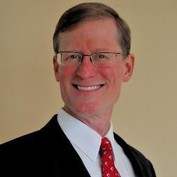
2013–14 Green Chemistry Lecture, April 14, 2014
David J. C. Constable, ACS Green Chemistry Institute
"Practicing sustainable and green chemistry is more than a good idea, it’s essential."
Without a doubt, an amazing variety of molecules have been created by chemists to support our civilization! By some estimates there are about 80,000 chemicals or more in use, although there are probably only about 4,000 that we use to any significant extent on a daily basis. And for a majority of this vast variety of chemicals we have a limited amount of information upon which to make reasonable decisions about their toxicity to humans or the environment, their degradability (biological or otherwise), our ability to recycle or reuse them, or their renewability. That really has been the impetus to much of what has been undertaken in green chemistry over the past 15 years or so.
Society is heavily dependent on these chemicals, and we are rapidly depleting known reserves of many key elements. For many elements that are of critical importance, we are taking a large amount of mass, concentrating the desired elements and dispersing these same elements into different products in a form that is equally difficult to recover and reuse. There are some bright spots, as in the case of catalytic converters on cars where there is recycling, but we still lose large amounts of the metal out the exhaust pipes of our automobiles. For the foreseeable future, we will continue to use these metals because they enable our current way of life. But in requiring these metals, we will be driven to increasingly more difficult extractions, to the oceans and lower grade ores, all of which will come at an increasing human and environmental cost.
This talk will set the context for the problem, offer several compelling examples where key material life cycles need to be closed, and discuss a way forward.
David J.C. Constable is currently the Director of the American Chemical Society’s Green Chemistry Institute®. From the end of September, 2011 until January, 2013 David worked as the owner and principal at Sustainability Foresights, LLC. David left Lockheed Martin as the Corporate Vice President of Energy, Environment, Safety & Health (ESH) at the end of September 2011. In that role, he led the ESH organization, set corporate EESH policies, evaluated the Corporation’s ESH performance and provided leadership to improve corporate-wide performance in EESH. Prior to joining Lockheed Martin, David was the Director of Operational Sustainability in the Corporate Environment, Health, and Safety Department at GlaxoSmithKline. In that global role, he championed Environment, Health and Safety support for New Product Development and Supply. He also led GlaxoSmithKline’s development of programs, systems, tools, and methodologies that integrated sustainability, life cycle inventory assessment, green chemistry, and green technology activities into existing business processes. During David’s tenure with GlaxoSmithKline, he held positions of increasing responsibility and global reach within Corporate Environment, Health and Safety. He first joined SmithKline Beecham, a predecessor to GlaxoSmithKline, in 1991, and worked in the company’s Environmental Research Laboratory, helping to develop environmental fate, effects, and treatability data for drug substances in SmithKline Beecham’s portfolio. Prior to joining SmithKline Beecham, he served as a Group Leader in the SHEA Analytical Services group of ICI Americas.
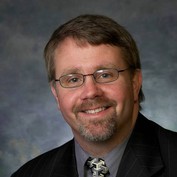
2012/2013 Green Chemistry Lecture
John C. Warner, Warner Babcock Institute for Green Chemistry
"Green chemistry: New eyes and new ideas in science"
We constantly hear rumblings regarding the inability of scientists to innovate "like they used to". We hear about the hazards of chemistry and the desperate need to put society on a sustainable pathway. We scientists worry about the general public's lack of appreciation or ability to understand basic science. It is an inescapable reality that the next generation of students in chemistry will be living and working in a very different world than the previous generation. Despair is not an option. The future is brighter than ever. We need to attract the next generation of students into the optimistic promise of green chemistry. The evolution of Green Chemistry is happening around us. Industrial labs are embracing the principles and Academic Departments across the country are reorienting their curriculum. This discussion will explain why students (and their instructors) need to know that they are essential to achieving a sustainable future. Gordon College is at the forefront of this movement! Albert Einstein once said that "No problem can be solved at the same level of awareness that created it". We need a diversity of students that have new perspectives and new ideas, to help us chart our path forward.
John is the President and Chief Technology Officer of the Warner Babcock Institute for Green Chemistry and also President of the Beyond Benign Foundation
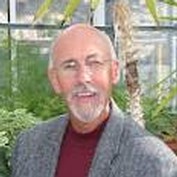
2011/2012 Green Chemistry Lecture
Michael C. Cann, University of Scranton
"Green Chemistry: Chemistry for the Long Haul"
As concerns over such issues as food, water, energy, climate change and waste production escalate, sustainability is rapidly moving from the wings to center stage on the world agenda. Chemistry, the central science, must play a central role in moving humanity onto a sustainable path. Green Chemistry (environmentally benign chemistry) is the paradigm that will aid in the development of this sustainability. Green chemistry not only focuses on pollution prevention, but also the efficient use of resources, use of renewable resources, and energy conservation. This presentation will highlight the ethos of green chemistry, the twelve principles of green chemistry, specific examples of green chemistry from the winners of the Presidential Green Chemistry Challenge Awards, and some of our efforts to infuse green chemistry into the curriculum.
Professor Cann reminded us why we are excited about green chemistry here at Gordon.
Michael Cann is originally from the Saratoga region of upstate New York (USA) and attended Marist College where he earned his BA in chemistry in 1969. Mike received his MA and PhD in organic chemistry from Stony Brook University in 1972 and 1973. He was a post-doctoral fellow at the University of Utah (1973-74), and a Lecturer at the University of Colorado-Denver (1974-75). Since 1975 he has been a chemistry faculty member at the University of Scranton where he is also the Co-Director of Environmental Science. His areas of interest include microwave assisted reactions, byproducts from biodiesel production, green chemistry, and sustainability.
Mike has developed web-based green chemistry teaching modules and books dealing with real-world cases in green chemistry. He is the co-author of an environmental chemistry text and Chemistry in Context, 7th edition. He is the editor of a book series, Sustainability: Contributions through Science and Technology, and he runs an annual workshop on sustainability for Scranton faculty.
He has taught a number of undergraduate courses including general chemistry, organic chemistry, environmental chemistry, topics in environmental science, internship in environmental science and elements of chemistry, and graduate courses in mechanistic and structural organic chemistry.
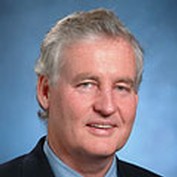
2010/2011 Green Chemistry Lecture
Terry Collins, Carnegie Mellon University
"The Design of Iron-TAML Activators: Effective Small Molecule Mimics of the Peroxidase Enzymes"
Research in Carnegie Mellon’s Institute for Green Science is focused on the design, development, mechanism of action, and myriad uses of TAML activators. TAML activators with iron as the metal are the first miniaturized replicas of the peroxidase enzymes, which activate hydrogen peroxide throughout nature. The key to the TAML discovery and development has been the Collins iterative design protocol. This protocol is focused primarily on obtaining strongly electron-donating ligand systems where derivative complexes are able to resist both hydrolytic and oxidative degradation under the aggressive conditions of peroxidase-like processes. After being pursued for 15 years, the protocol yielded the prototype TAML activator. Further advancement via the protocol to higher generation catalysts has led to over 20 TAML activators that exhibit varying reactivities (with H2O2 and other peroxides), selectivities and lifetimes.
See link below to download the full description of talk.
Read the essay "Toward Sustainable Chemistry" by Terry in Science.
Terry is is the Teresa Heinz Professor of Green Chemistry at Carnegie Mellon University where he has taught since 1987. He is the Director of Carnegie Mellon’s Institute for Green Science.
Professor Collins is one of the founders of the field of Green Chemistry. He is internationally recognized for his development of small molecule catalysts called TAML® activators that activate natural oxidants such as hydrogen peroxide to clean water of numerous pollutants and pathogens. TAML activators are the first effective mimics of the peroxidase enzymes, a huge class of enzymes found throughout nature.
Professor Collins’ honors include among others the Heinz Award for the Environment, the EPA’s 1999 Presidential Green Chemistry Challenge Award, the Inaugural Kauffman Award of the Pittsburgh Foundation, Japan’s Society of Pure and Applied Coordination Chemistry Award, and the Pittsburgh Section Award of the ACS,. He is an honorary professor and a Distinguished Alumnus awardee of Auckland University and an Honorary Fellow of the Royal Society of New Zealand.
2011 Green Chemistry Lecture - Design of TAML Activators (PDF)
2009/2010 Green Chemistry Lecture
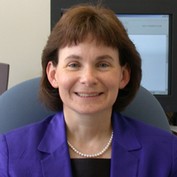
Mary Kirchhoff, ACS Education Division
"Sustainability Through Green Chemistry"
Green chemistry is the design of chemical products and processes that reduce or eliminate the use and generation of hazardous substances. Green chemistry is a science-based approach to pollution prevention that is also profitable. Life-saving pharmaceuticals can be produced while minimizing the amount of waste generated, plastics that biodegrade can be synthesized from plants, and reactions can be run in water rather than in traditional organic solvents by applying green chemistry principles to chemical products and processes. This presentation will highlight the principles and practice of green chemistry and provide examples that illustrate the role of green chemistry in achieving sustainability.
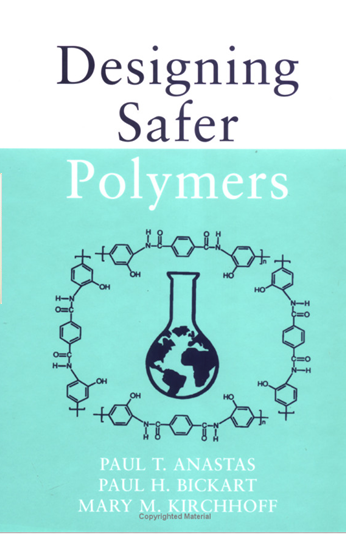
Mary Kirchhoff is Director of the American Chemical Society Education Division. She received her Ph.D. in organic chemistry from the University of New Hampshire and spent nine years with the Chemistry Department at Trinity College in Washington, DC. She became involved with green chemistry when she received an AAAS Environmental Fellowship to work with the U.S. EPA's green chemistry program. Mary served for three years as Assistant Director of the ACS Green Chemistry Institute. She is a co-author or co-editor on Designing Safer Polymers, Greener Approaches to Undergraduate Chemistry Experiments, and Going Green: Integrating Green Chemistry into the Curriculum. In 2006, Mary was elected a Fellow of the American Association for the Advancement of Science.
Designing Safer Polymers, Greener Approaches to Undergraduate Chemistry Experiments (BMP)
)
2008/2009 Green Chemistry Lecture
Paul Anastas, Yale University
"Green Chemistry, Current Status and Future Challenges"
Dr. Paul Anastas challenged an audience of over one hundred on why we need to support and be involved in green chemistry. He showed how far we have come and provided direction on where we
still need to go.
Professor Anastas is the Director of the Center for Green Chemistry and Green Engineering and the Teresa and H. John Heinz III Professor in the Practice of Chemistry for the Environment at Yale University. The objective of his center's research is to design green chemistry systems and explore new chemical systems that accomplish efficient transformations and separations through the use of integrated synthetic and molecular engineering techniques. Professor Anastas is frequently referred to as the father of green chemistry, having introduced the term in 1991. He has won numerous awards, he is a highly sought after speaker, and he is a prolific author. His influential Green Chemistry: Theory & Practice, co-authored with Dr. John Warner, is the seminal work in the field of green chemistry.
Click for more information on the Center for Green Chemistry and Engineering at Yale
)
Gordon College Green Chemistry (gc)2
PAST GREEN CHEMISTRY LECTURES
2013/2014
"Practicing sustainable and green chemistry is more than a good idea, it’s essential."
Dr. David J. C. Constable, Director, Green Chemistry Institute, American Chemical Society
2012/2013
"Green chemistry: New eyes and new ideas in science"
Dr. John C. Warner, President and Chief Technology Officer, Warner Babcock Institute for Green Chemistry
2011/2012
"Green Chemistry: Chemistry for the Long Haul"
Dr. Michael C. Cann, Department of Chemistry, University of Scranton, Scranton, PA
2010/2011
"The Design of Iron-TAML Activators: Effective Small Molecule Mimics of the Peroxidase Enzymes"
Dr. Terrence Collins, Institute for Green Science, Carnegie Mellon University
2009/2010
"Sustainability Through Green Chemistry"
Dr. Mary Kirchhoff, American Chemical Society
2008/2009
"Green Chemistry, Current Status and Future Challenges"
Dr. Paul Anastas, Yale University
2007/2008
"Green Chemistry: Promoting Sustainability through Education, a Fulbright Experience in Thailand"
Dr. Margaret Kerr, Worcester State College Worcester
2006/2007
"Innovations in Green Chemistry–From Electronics to Cosmetics"
Dr. Amy Cannon, University of Massachusetts at Lowell
2005/2006
"Frontiers in Green Nanoscience"
Dr. Julie Haack, University of Oregon
2004/2005
"The Business Case for Green Chemistry"
Dr. Berkeley (Buzz) Cue, Vice President of Pharmaceuticals (retired), Pfizer Pharmaceuticals
2003/2004
"Entropic Control: Green Chemistry Using Weak Molecular Forces"
Dr. John Warner, University of Massachusetts Boston
 Green Chemistry
 Annual Green Chemistry Lectures
 Home
Home



Gordon College, 255 Grapevine Road, Wenham, MA 01984
978 867 4000 | [email protected] | [email protected]





- Apply Today
- Visit Campus
- Request Information
- Contact
- Directions/Map
- The Bell: News & Stories
- Jobs
- About
- Admissions & Aid
- Academics
- Student Life
- Faith
- Athletics
- Graduate Programs
- Giving
- Alumni
- Parents
- Student Links
- Human Resources
- Bennett Center
- La Vida
- Website Privacy
- Title IX
Gordon College is New England’s top Christian college, located on the North Shore of Boston in Wenham, MA.
© Copyright 2024. All rights reserved.
866-665-1780