
Concussions
About Concussions
A concussion can occur from the forceful movement that happens in a collision between players while playing sports, a motor vehicle accident or from the impact of a fall. Although there are no physical signs, the brain becomes ‘injured’ with a forceful change in movement. A loss of consciousness may occur, but it is not common. Following a concussion, the brain has a difficult time performing its normal functions, such as thinking and processing. Everyday activities such as reading, driving and going to work/school may become challenging.
Normally, the brain will recover on its own within four weeks. However, for some individuals, especially without proper management, concussion-related symptoms will persist for an extended period of time. When symptoms persist beyond two to three weeks, it is appropriate to be evaluated by a team of healthcare professionals including a physical therapist to determine the appropriate treatment to resolve symptoms and return to your prior activities.
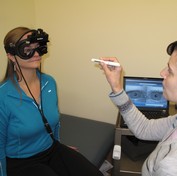
What to Expect at Your First Visit
A typical evaluation begins with a detailed history of your injury and subsequent symptoms. A thorough oculomotor exam is performed using our infrared video goggles where we evaluate your eye movements and determine your response to these eye movements. Your cervical spine (neck) is also assessed for any changes in muscles or joints. Balance testing may be performed on the SMART Balance Master System or Bertec Balance System using appropriate assessments such as the Sensory Organization Test (SOT) or Balance Error Scoring Test. Other evidence-based tests may be utilized to assess your walking, coordination and vestibular system (inner ear). Any results from testing performed outside of our clinic can be used in conjunction with our findings to help determine the most effective treatment for you.
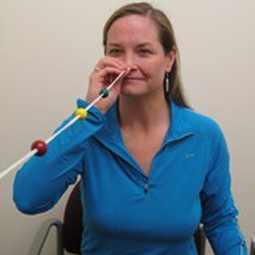
What to Expect During Treatment
Based on the results of your evaluation, your physical therapist will create an individualized treatment plan that best suits your recovery needs. Treatment often begins with educating you on how to better manage your symptoms and offering recommendations to slowly progress activities based on your tolerance. Exercises will also be prescribed for performance, which may include eye and vestibular (inner ear) exercises, balance training and/or exertional training.
 Physical Therapy
 Concussions
 Home
Home


Gordon College, 255 Grapevine Road, Wenham, MA 01984
978 867 4000 | [email protected] | [email protected]






- Apply Today
- Visit Campus
- Request Information
- Contact
- Directions/Map
- The Bell: News & Stories
- Jobs
- About
- Admissions & Aid
- Academics
- Student Life
- Faith
- Athletics
- Graduate Programs
- Giving
- Alumni
- Parents
- Student Links
- Human Resources
- Bennett Center
- La Vida
- Website Privacy
- Title IX
Gordon College is New England’s top Christian college, located on the North Shore of Boston in Wenham, MA.
© Copyright 2024. All rights reserved.
866-665-1780